I never expected my life to change because of an illness I had barely heard of.
I knew about chronic illness, but I didn’t understand what it meant to actually live with it.
My lupus story started with a hospital stay.
After months of struggling to breathe, unbearable pain that kept me awake most nights, feeling utterly exhausted from even the most simple tasks, I finally landed up in hospital under specialist care, thanks to a GP that actually listened to me. I had hemolytic anaemia, pleural effusions and collapsed lungs. After a plethora of tests, they diagnosed me with Lupus.
I remember the pain. The anxiety. Not understanding what was happening to my body or what my future was going to look like.
Somewhere in the middle of that first hospital stay, someone gave me Psalm 121:
“I lift up my eyes to the mountains—where does my help come from? My help comes from the Lord, maker of heaven and earth.”
Those words stayed with me. They became a quiet reminder that even when I didn’t understand what was happening, I wasn’t facing it completely alone.
The year that changed everything
Sometimes, when I tell people my story, I have to say it all in one sentence.
In a single year, I was diagnosed with lupus.
I landed in critical condition in ICU three times.
My mother passed away.
I found out I was pregnant.
And then I miscarried.
It is difficult to comprehend how much can happen in one year until you are the person living it.
For a long time, I think I believed that because I had survived, I should simply be able to move on.
Then, while telling someone my story, they said something that I needed to hear:
“You’re allowed to still be affected by all of it. You nearly died.”
She was right. Surviving something doesn’t mean it leaves no scars.
The panic. The hospital rooms. The alarms. The fear of not being able to breathe. The grief and the loss.
My body remembered things even when I wanted to forget them.
Medical trauma became part of my recovery. Healing wasn’t only about getting my health under control. I had to learn how to feel safe in my own body again. I had to work through panic, memories and fear.
I had to accept that being strong didn’t mean pretending I wasn’t affected.
Building a career while my body was struggling
The strange thing about life is that it doesn’t stop when you get sick.
Bills still need to be paid. Careers still need to be built. Exams still need to be written.
While all of this was happening, I was working full time, studying, and completing an internship part time. I was also preparing for my board examination.
I studied while sick. I worked while exhausted.
I kept going even when my body was telling me to stop.
And somehow, I passed my board examination with distinction and achieved the second-best score in the country.
I am incredibly proud of that achievement. Not because it proves I can push through anything, but because I know what it took to get there.
Trying to maintain a career while living with a serious chronic illness meant constantly negotiating between what my body needed and what my life demanded.
I had limited sick leave.
Then I ran out.
I had to take unpaid leave.
Eventually, I had no vacation leave left because time that might have been used for rest had already been spent recovering.
I wanted to work. I wanted to study. I wanted to succeed. I wanted to build a future.
But sometimes what my body needed most was simply for me to stop.
Learning that those things could both be true was one of the hardest lessons lupus taught me.
When breathing became something I had to learn again
One of the biggest challenges lupus brought into my life was my lungs.
There was a time when walking up one flight of stairs felt like an enormous achievement.
I even went to physiotherapy to learn how to breathe properly again.
There is something incredibly humbling about having to relearn something your body has always done automatically.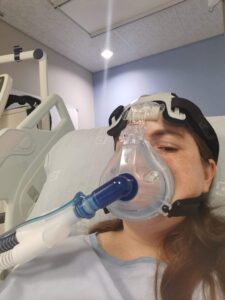
Breathing.
Walking.
Climbing stairs.
Things I had never thought twice about suddenly became things I had to work towards.
For a while, my world became much smaller.
I had to listen to my body. I had to accept that I couldn’t always push through. And I had to learn that resting wasn’t laziness.
It was survival.
The people who carried me
I cannot tell my lupus story without talking about the people who walked through it with me.
My husband was beside me through all of it.
He helped me study. He sat up with me through nights when I couldn’t breathe. He supported me through panic attacks and through the aftermath of medical trauma.
He saw the parts of this illness that other people never did.
Sometimes he knows my limits better than I know them myself. Sometimes he sees that I’m pushing too hard before I realise it. And sometimes he simply sits beside me.
There is something incredibly powerful about being loved by someone who has seen you at your strongest and your most frightened, and stayed through both.
Our family, our friends and our church carried us too.
Sometimes it was something big.
Sometimes it was a meal, a message, a prayer, a lift somewhere, or simply someone saying, “I’m here.”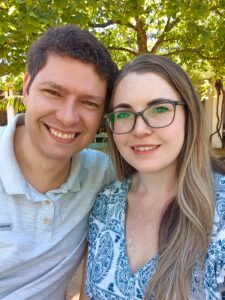
Those things might look small from the outside.
They weren’t.
When your world has been turned upside down, small acts of kindness can become anchors.
Learning to live with lupus
Lupus has taught me that managing a chronic illness can become a full-time job of its own.
There are daily medications, appointments, blood tests and specialists. And then there are the infusions.
My biologic treatment means hospital days every six months, with two infusions two weeks apart.
Recently, a nurse asked me about my ongoing treatment and then said:
“This can’t be your life.”
I understood what she meant.
But I also thought about it afterwards.
It is my life.
I didn’t choose it.
I wouldn’t have chosen it.
But it is the life I have, and I have to learn how to live it.
There is a difference between accepting that something is part of your life and giving up.
Acceptance, for me, means I stop waiting for my life to begin once I’m healthy enough.
My life is happening now.
So I have to live it.
Finding my way back to myself
Over time, I realised that stress was affecting me more than I wanted to admit.
Changing jobs was difficult. Moving across the country was difficult.
But eventually, something changed.
With less stress and a different lifestyle, my body began to feel different too.
My lungs improved.
My breathing became easier.
I could walk further.
I could walk along the beach or through a park without feeling like every step was an achievement.
And then came the stairs.
During a trip to Bali, I found myself climbing so many stairs!
And I did it.
I stood there knowing that there had been a time when one flight of stairs at work had left me struggling to breathe.
Now I was on the other side of the world, climbing stairs.
It wasn’t really about the stairs.
It was about everything that had happened between those two versions of me.
The small wins
Lupus has changed my definition of progress.
Progress isn’t always dramatic.
Sometimes it is a blood test that comes back mostly normal.
Sometimes it is a better day.
Sometimes it is walking further than you could before.
Sometimes it is travelling.
Sometimes it is simply having an ordinary day.
I’ve learned to celebrate those moments because when you’ve lived through the difficult days, you understand that they aren’t small at all.
Being able to breathe easier is a big win.
Walking on the beach is a big win.
Climbing stairs is a big win.
And waking up one morning and realising that you are no longer living entirely inside the worst moments of your past is perhaps the biggest win of all.
Still here
I don’t want to tell my story as though lupus is something I have conquered.
It isn’t.
I still live with lupus. I still take medication. I still have difficult days.
I am still healing.
But my story isn’t only about what lupus has taken from me.
It is about what I’ve learned.
I’ve learned to listen to my body.
I’ve learned that rest is not weakness.
I’ve learned that asking for help is not failure.
I’ve learned that achievement and illness can exist at the same time.
I’ve learned that surviving something doesn’t mean I have to pretend it didn’t hurt.
And I’ve learned that healing isn’t about becoming the person I was before.
Maybe it is about becoming someone who knows herself better.
Someone who knows when to fight and when to rest.
Someone who can look at everything that happened and still say:
I am here.
Sometimes I think about the woman who lay in that hospital bed during her first hospital stay.
She was scared.
She was in pain.
She didn’t know what was happening.
She didn’t know how much her life was about to change.
But she had that verse.
“I lift up my eyes to the mountains—where does my help come from?”
Looking back now, I can see how far she has come.
There were moments when grief and panic and the weight of it all felt impossible to carry.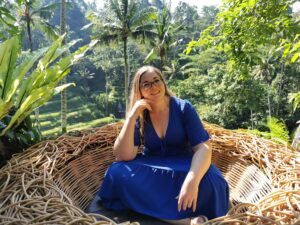
And yet, here I am.
I don’t know exactly what the future with lupus will look like.
But I know I don’t have to face it alone.
Lupus is part of my story.
The hospital rooms are part of my story.
The ICU is part of my story.
The grief is part of my story.
The medical trauma is part of my story.
But none of those things are the whole story.
There is also the woman who kept studying.
The woman who climbed those stairs in Bali.
The woman who learned to breathe again.
The woman who learned to rest.
The woman who learned to ask for help.
The woman who is still finding beauty and joy in ordinary days.
The woman who is still healing.
A nurse once said, “This can’t be your life.”
But it is.
This is my life.
And I am going to live it.
Not perfectly.
Not without fear.
Not without difficult days.
But fully.
One breath at a time.
💜Laetitia du Toit